


Gaurav Pokharel
KATHMANDU – What was initially described as an informal visit by Bhutan’s King Jigme Khesar Namgyel Wangchuk to Nepal on Friday unfolded with all the hallmarks of a formal state-level trip—minus the official designation.
Though the visit was previously understood to be a brief private stopover en route from India, a delegation of senior Nepali government officials, led by Foreign Minister Arzu Rana Deuba, greeted the monarch at Kathmandu’s Tribhuvan International Airport. Also present were Foreign Secretary Amrit Bahadur Rai and other high-ranking bureaucrats. Yet notably absent from the king’s entourage was Queen Jetsun Pema, whose presence had been anticipated.
King Wangchuk arrived aboard a Royal Bhutan Airlines flight at 9:42am and departed just over four hours later, returning to New Delhi at 1:56pm. Despite the short duration, the elaborate reception and security measures in place suggested the visit bore greater significance than previously indicated.
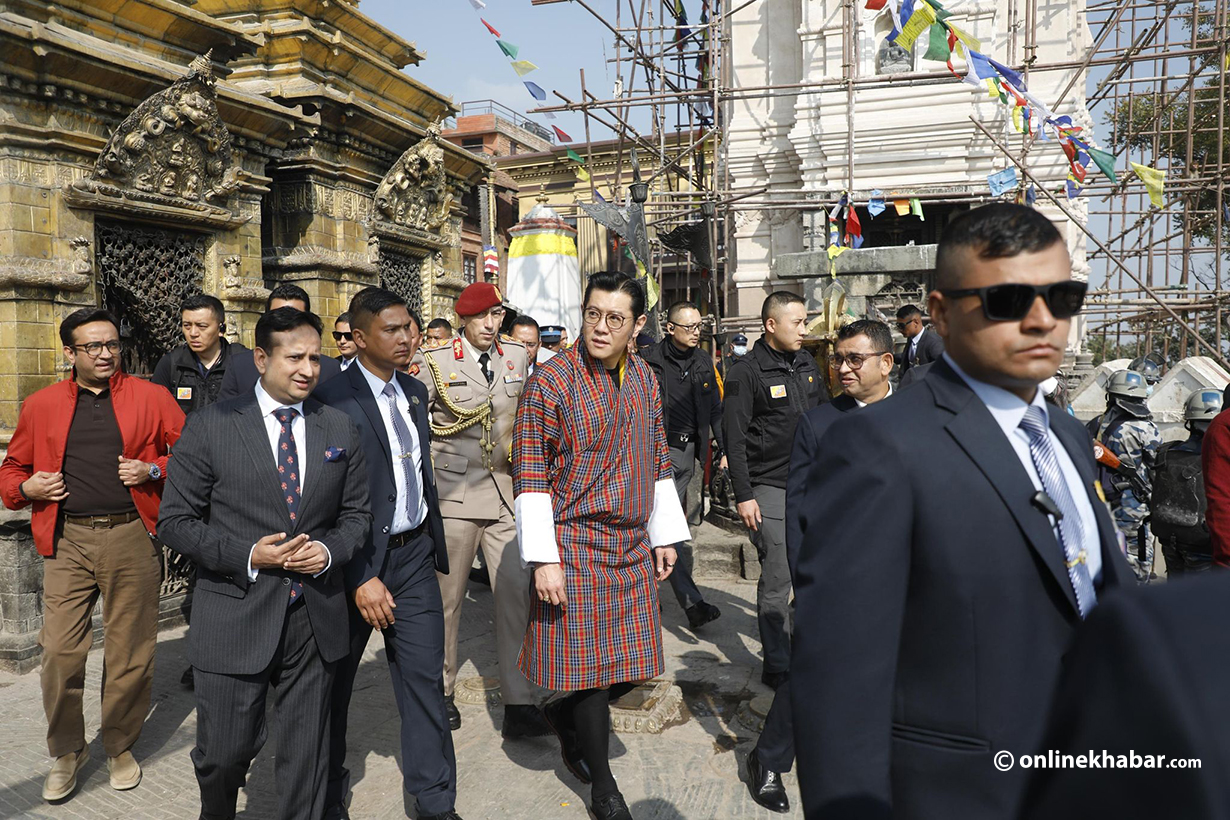
“The level of preparation and the king’s entourage made it clear this was more than a private visit,” said a senior security official.
The government arranged what is referred to as “Category A” security—typically reserved for heads of state and other high-profile dignitaries. The arrangements involved a tight-knit inner circle of Nepal Army personnel, backed by outer perimeters manned by Nepal Police, the Armed Police Force, and the National Investigation Department. Medical teams, ambulances, and emergency response units were also deployed.
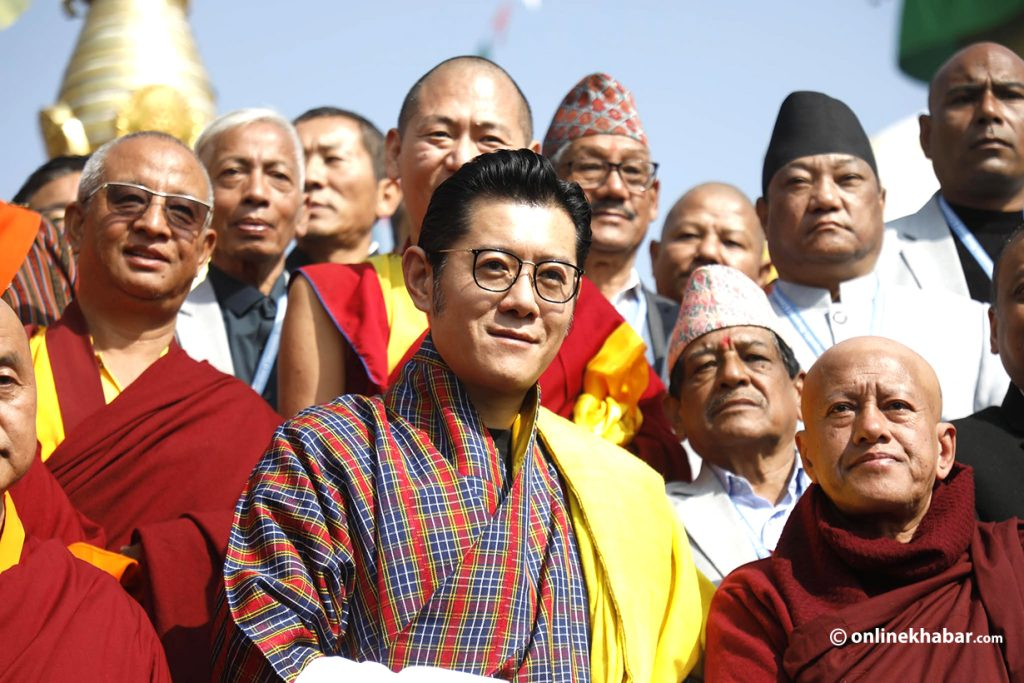
After a brief welcome at the VIP lounge, the king was escorted to the Buddhist site of Swayambhunath in a formal motorcade, adding to speculation about the visit’s true nature.
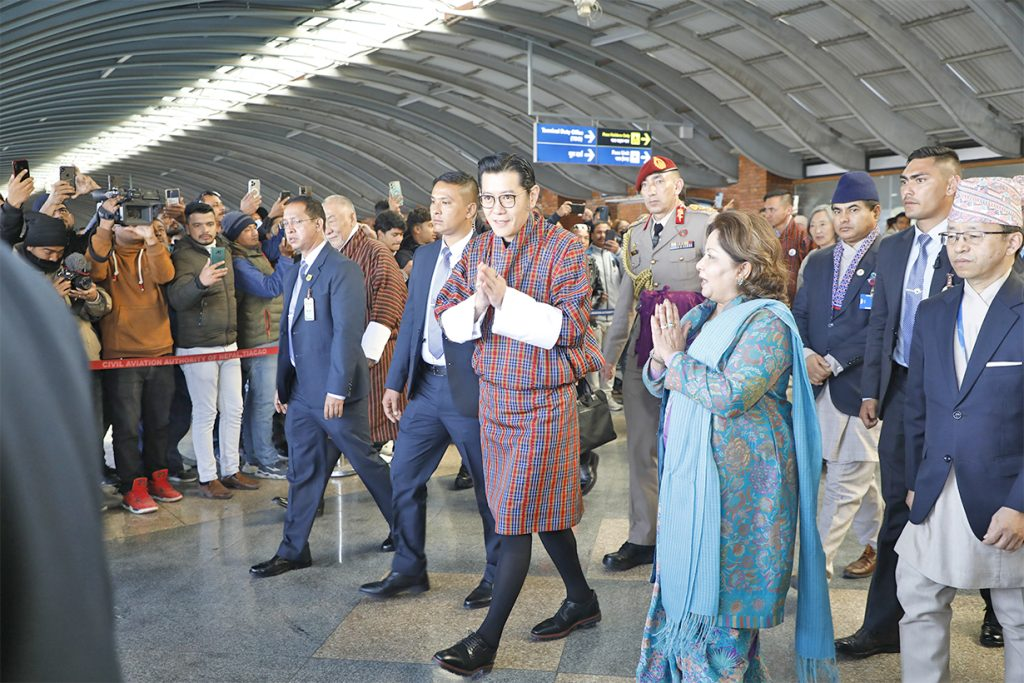
Diplomatic ambiguity
Bhutan had reportedly notified Nepal’s Ministry of Foreign Affairs that King Wangchuk—who had been in India for official meetings—would make a brief private visit to Kathmandu accompanied by his wife. The king’s visit to Kathmandu was initially understood as a transit stop, possibly to visit religious sites such as Boudhanath and Swayambhunath. However, Queen Pema did not accompany him, and the brevity and structure of the trip left many puzzled.
Foreign policy analyst Dr Indra Adhikari cast doubt on the notion that such a visit could be considered entirely informal. “High-level visits from Bhutan to Nepal are extremely rare,” she said. “Calling this an informal stop does not reflect the reality on the ground.”
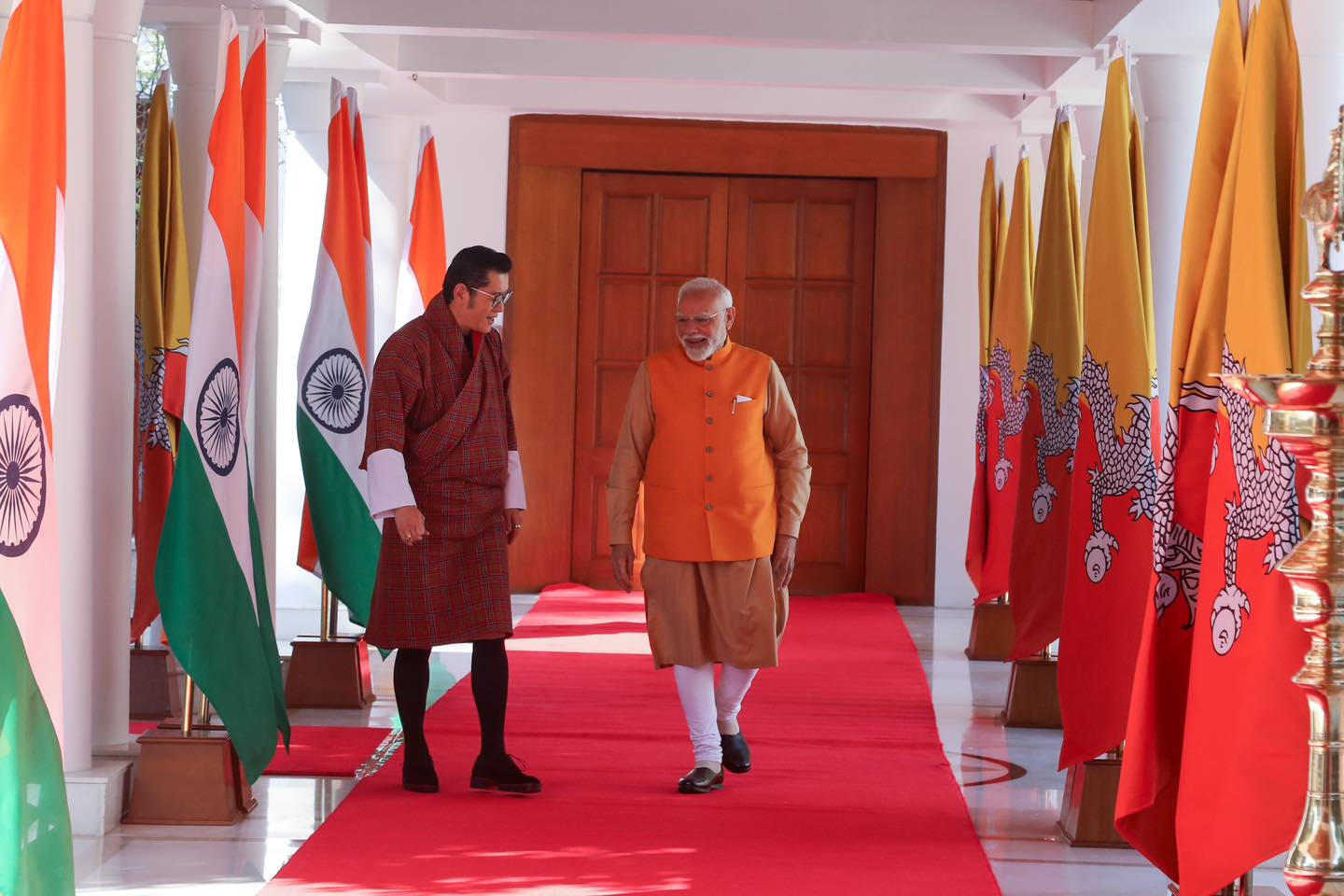
The king’s trip to Nepal followed a whirlwind official visit to India on Thursday, where he met Indian Prime Minister Narendra Modi, Foreign Minister S. Jaishankar and other senior officials. Bhutan’s Ministry of Foreign Affairs said the discussions focused on bilateral ties in trade, infrastructure, energy, education, and environmental conservation.
Neither New Delhi nor Thimphu made any public reference to the Nepal leg of the monarch’s trip.
A missed diplomatic opportunity?
The absence of publicised diplomatic engagement in Kathmandu has sparked criticism, especially from refugee advocates and former diplomats, who say Nepal failed to capitalise on the visit to raise long-standing concerns over the fate of Bhutanese refugees still living in the country.
After being expelled from Bhutan in the 1990s, around 120,000 ethnic Lhotshampa Bhutanese sought refuge in eastern Nepal. Though the majority were later resettled in third countries under a UN-led programme, more than 6,500 remain in refugee camps in Jhapa and Morang districts.
“The government missed a crucial opportunity,” said Tilak Rai, acting president of the Returnee Committee, from the Beldangi refugee camp. “We hoped Nepal would raise our case directly with the king. But nothing happened.”
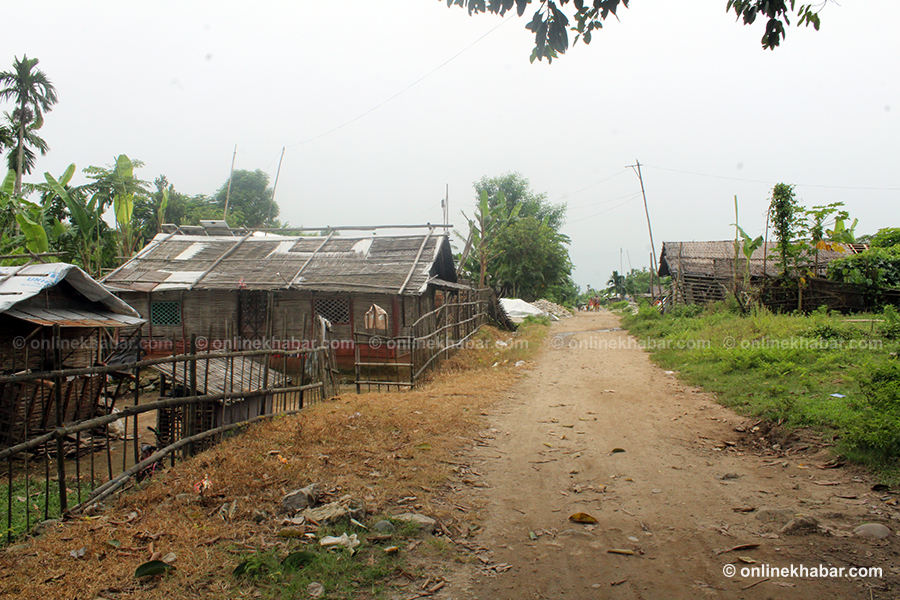
Ram Karki, coordinator of the international campaign for the release of Bhutanese political prisoners based in The Hague, echoed the sentiment. “If Nepal’s foreign minister received the king at the airport, the visit should have been considered official. It was the right time to speak about unresolved refugee issues.”
According to Dr Adhikari, the reluctance to label the visit as formal may reflect the delicate state of Bhutan–Nepal relations, particularly around the refugee issue. “There’s been little bilateral progress,” she said. “The matter has long been managed by third parties, and the warmth necessary for direct engagement still seems absent.”
Refugees currently residing in Nepal say they continue to hope for repatriation, despite dwindling international support. The UNHCR office in Damak closed in 2020, and the World Food Programme ceased assistance in 2019.
A royal connection to Nepal
Adding a personal layer to the monarch’s trip is his own connection to the country. King Wangchuk was born in Kathmandu on 21 February 1980, during a time of close ties between the Nepali and Bhutanese royal families. His mother, Queen Ashi Chhiring Yangdon—then the third wife of King Jigme Singye Wangchuk—gave birth at a maternity hospital in Thapathali.
Former Nepali ambassador to Bhutan, Nilambar Acharya, recalls that the king spoke fondly of his birthplace during a brief meeting in 2019. “He told me he was born in Nepal and had spent part of his childhood here. There’s an emotional bond.”
Acharya said the king had also expressed a wish to reconnect with medical staff who had cared for him as an infant, including Dr Divyeshwori Malla, the daughter of King Tribhuvan.
During Friday’s visit, the king appeared relaxed and pleased. At Swayambhunath, when asked about his experience, he replied simply, “I am very happy to be in Nepal.”
That sentiment, however, has done little to assuage those who hoped the visit would prompt a new chapter in Nepal–Bhutan relations. For now, the question remains: was it truly just an informal trip—or a diplomatic opportunity sidestepped?
